
 Today at the Gurdwara, we remembered Bhai Taru Singh.
In some way, everyday we remember – his exploits are mentioned in Ardas. The lines:
Khopreean Luhaiyaan – those that lost their heads/scalps – for my Punjabi Refill brothers/sisters – here you go
and then followed by Sikhi Kesan Suasan Naal Nibahi – “who sustained their Sikhi and Kes til their last breath’)
These lines are usually invoked to remember Bhai Taru Singh. While the famed feature-length movie would give a better overview, for now I copy from some Sikh history websites. Our main source comes from Rattan Singh Bhangu, author of Prachin Panth Prakash, and grandson of Bhai Mehtab Singh, who took the head of Massa Rangar for attempting to desecrate Darbar Sahib, just as Sukha and Jinda did to AS Vaidya 246 years later (1986). Here is a short synopsis:
Hoping that Bhai Taru Singh will help in arresting other Singhs if he embraces Islam, the Governor said to him, “All your sins can be pardoned if you become a Muslim and cut and give me those long hair of yours so that I may make a string of them for weaving my bed.” Bhai Taru Singh said, “I shall keep my faith with these hair and you shall be controlled by my shoes and with these you will die.” The Governor was beside himself with rage on hearing this. He got Bhai Taru Singh mounted on rotating wheels of torture and then from a cobbler got his scalp removed so that hair may not grow again. After that he got him thrown in a ditch.
In the evening the Governor could not pass urine. When the efforts of the physicians failed, the Governor sent Bhai Subeg Singh to seek pardon from Bhai Taru Singh. He sent him to the leader of Dal Khalsa. The leader said, “The Governor can pass urine if he is hit on the head with the shoe of Bhai Taru Singh but he will die before Bhai Taru Singh.[link]
And so it was Zakria Khan, the barbarous governor of Punjab, was hit on the head with Bhai Taru Singh’s shoe and survived for 22 days, before finally dying. Bhai Taru Singh left this life soon after.
Since that time in 1745, the life of Bhai Taru Singh has been an inspiration for all Sikhs.
So, it seems as if Ricky Gill has made it past the initial hurdles of running for Congress.
I saw this and just could not contain my own excitement.
For those of you that have not heard yet, click to watch.
Woot woot California!

Some on going conversations that we have partially had here on the TLH, as well as in person with a variety of peers that have reflected and discussed the fact that many young people today do not attend, participate, or engage within our gurdwaras. Whereas I’ve been told that this varies from being a Canadian to those of us here in the United States, it is fantastic to see members of our youth generation stepping up and claiming space within our gurdwaras, and utilizing the resources and talents they have access to.
The nature of this post is not to address any ‘politics’ behind the specific gurdwara elections referenced, but instead to credit the young man using his voice (and humor) to take a stand and put effort into driving change. Jus Reign, AkaAmazing, and others…step aside, this kid is funny and has a purpose!
Enjoy!
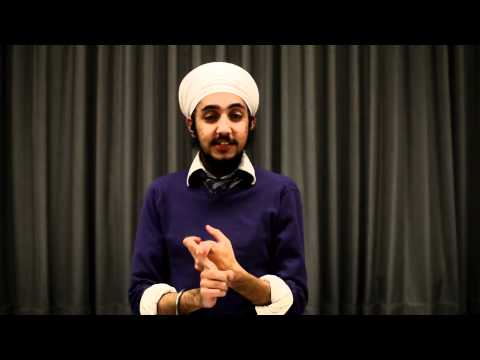
Yet few women’s stories about their experiences with health issues are shared beyond workplace women’s rooms, grocery store checkout lines and kitchen tables. Sorrowful and infuriating, hilarious and humiliating, our stories must be told, because women’s health concerns have been denied, ignored, misdiagnosed, and belittled. Today, as women are taking back control of their health and wresting their bodies away from the medicalization of what used to be natural, our stories — of successes and failures — will help others do the same.
This anthology will serve as a soapbox for women of all sexualities, races, classes, ages, and abilities, from which to tell their tales of health and illness, care giving and receiving, recovery and degeneration, birthing and dying. It is a soft shoulder and a bullhorn, a cup of chamomile tea and a concoction that will knock your socks off. We hope you have a feminist story or two you want to share with us in the form of an essay, short fiction piece, or poem. We are particularly interested in creative approaches to the overall theme of women and health.
 Guest post by Sarina Kaur
“A Sikh’s entire life is life of benevolent exertion”. Sikh Rehat Maryada (Code of Conduct)
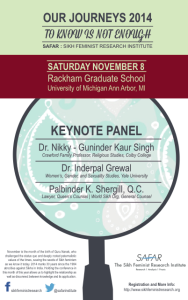
Benevolent exertion. These powerful words along with countless examples from history, gurbani, and rehat remind us that to question, challenge, and think for the purpose of informing our actions according to the Guru’s teachings is a Sikh’s birthright, privilege, and responsibility. This benevolent exertion toward an egalitarian world and empowered society devoid of oppression is a standard rooted in our collective psyche. But to know this, is not enough. The first Sikh Feminist Conference in North America, by SAFAR: the Sikh Feminist Research Institute, seeks to unpack what this means for Sikhs of the 21st century.
Personally, at every turn in my own journey toward creating a life imbibed with thoughtful action toward a more just and humane world, I have craved to understand and experience the unspoken viewpoints of the Kaur experience. Today, few can deny that no matter where you look- within the Sikh social context or in the global context-the dominant narrative is not inclusive of the female voice; that our calibrated center-where we collide as a society-is not in line with the standards our Guru’s introduced. A space for expansive revival, attention, voice and praxis to the feminist values and egalitarian politics inherent within Sikhi is a step toward a more calibrated center.[1] SAFAR’s Conference Program promises such progressive steps.
Distinguished keynote panelists, Dr. Nikky-Gurinder Kaur Singh, Dr. Inderpal Grewal, and Palbinder K. Shergill will launch the discussions and introspections for the day while exploring the topic “What Do We Know?” By exploring what knowledge exists from various sources, this panel promises to dive into an exploration of the intersectionality of Sikhi, feminism and discourse on Sikh Feminism. Each of the panelists is a pioneer in her own right; while Dr. Singh is often fondly thought of as the mother of ‘Sikh feminism’, Dr. Grewal from Yale is lauded for her seminal work on ‘transnational feminism,’ while Ms. Shergill is a trailblazer in the courtrooms in Canada, and just recently distinguished herself as the only female lawyer in the Supreme Court, that too while articulating the fundamentals of religious freedom in a case about the religious freedoms for a non-Sikh-Sikhi in action! I look forward to their discourse and interaction with each other as moderated by writer and activist, Inni Kaur.
Guest blogged by Manpreet Kaur
Recently the Sikh American Legal Defense and Education Fund (SALDEF) announced that they will be honoring Gap, Inc. for taking “pride  in featuring the Sikh American identity†at their annual gala on October 11th in Washington, DC. As you may remember, last year, the Gap used Sikh actor and designer Waris Ahluwalia in their “Make Love†campaign. The Sikh community gave a lot of praise to Gap over social media posting and re-posting the advertisement as even encouraging Sikhs to purchase from and support the company. This support increased exponentially when Gap responded positively to racist vandalism on an ad in New York City.
While having a Sikh model on a mainstream advertisement might be a positive step especially a year after the Oak Creek tragedy, as Sikhs, how can we, as a community, support a company that has carried out horrific labor practices? Gap’s terrible labor practices in South Asian countries have been widely documented, putting employees in extremely dangerous working conditions with less than minimum compensation.
Gap, Inc. literally has blood on its hands, as 29 trapped garment workers died in a fire in a Bangladesh factory that produced clothing for the company in 2010. United Students Against Sweatshops states:
Human rights activists and labor groups have been calling on Gap to fix the factories in the rest of their Bangladesh supply chain since December 2010, but instead Gap is sticking with its own corporate-controlled voluntary initiative that lacks transparency, accountability, and worker voice. Gap initially promised to sign onto a meaningful fire and building safety agreement, but then backed out, announcing their own, go-it-alone initiative. Gap is using the same self-regulatory approach that they and other brands have used for two decades and that has failed to protect the safety of workers in Bangladesh: factory monitoring controlled entirely by Gap, with no transparency, no role for workers or their trade unions, no commitment to pay prices to suppliers that make it feasible for them operate responsibly, and no binding commitments of any kind.
Guest blogged by Bandana Kaur
“Pavan guru paanee pitaa
Maataa dharat mahat
Divas raat du-i daa-ee daayaa
Khaylai sagal jagat”
-Guru Nanak SahibÂ
In honor of the Sikh concern for preserving ‘Mata Dharat’ (Mother Earth), Sikhs from cities across the northeast are joining the People’s Climate March in New York City on September 21st, the largest mass movement for climate justice in history.
Next week, world leaders are coming to New York City for a UN summit on the climate crisis. The world is urging governments to support an ambitious global agreement to dramatically reduce global warming pollution.
With our future on the line and the whole world watching, we’ll take a stand to bend the course of history. We’ll take to the streets to demand the world we know is within our reach: a world with an economy that works for people and the planet; a world safe from the ravages of climate change; a world with good jobs, clean air and water, and healthy communities.
Why Are We Marching?
We march because Sikhi affirms the sanctity of the Earth.
We march because the ecological basis of Sikhi rests in the understanding that the Creator (‘Qadir’) and the Creation (‘Qudrat’) are One. The Divine permeates all life, and is inherent in the manifest creation around us, from the wind that blows across land and skies, to the water that flows through rivers and seas, to the forests and fields and all creatures of land and sea that depend on the earth for sustenance.
We march because Sikh Gurus teach that there is no duality between the force which makes a flower grow and the petals we are able to touch and sense with our fingers.
We march because the Sikh Gurus referred to the Earth as a ‘Dharamsaal,’ a place where union with the Divine is attained. Guru Nanak describes this in Jap Sahib, that amid the rhythms of Creation, the changing seasons, air, and water, the Creator established the earth as the home for humans to realize their Divinity in this world.
Shonali Bose, writer and director of the acclaimed 2005 film Amu (which powerfully uncovered the brutal realities of 1984) has just  completed a new feature film called Margarita, with a Straw. Premiering next week at the Toronto International Film Festival, the film is a coming of age love story about a part-Sikh college student from Delhi named Laila who has cerebral palsy.
Given the popularity of Amu in the Sikh community, I wanted to interview Shonali about her new film, which explores equally important issues to those brought up in Amu—disability and sexuality among them. Read on for the full interview, and check out the trailer here.
What inspired you to make Margarita, with a Straw?
This my second film, which is inspired by my cousin sister Malini who has acute cerebral palsy. That’s a condition where the part of your brain that controls your motor skills is damaged at birth. But your emotional and intellectual abilities are intact. When I was 40 and Malini was 39, I asked her, what are we going to do for your 40th? It’s absolutely the best birthday. Her speech is usually garbled and difficult to understand. But sometimes when she is angry or excited – it comes out crystal clear. This was one of those times. She banged her fist on the table and spoke loud and clear: I just want to have sex by the time I’m 40! I grinned sheepishly and assured her it was not what it was made out to be, etc. But later when I was thinking about what she said, what she so passionately wanted – I realized that I had never thought about her sexuality much. Or maybe I just avoided it as I didn’t know what to do about it. This started me on my journey of Margarita.
As I started exploring my fictional character and her issues, the big question that came up was one of self worth. This is a core issue that everyone faces, whether one is disabled or not. From there it went to a place of finding deep self acceptance and self love.
I loved your first film, Amu, which powerfully highlighted the anti-Sikh pograms of 1984 through the eyes of a young Sikh woman. The main character in your new film is also a Sikh woman. Where does your interest in telling “Sikh stories” come from?
I don’t see them as Sikh stories at all. The 1984 genocide is a watershed in the entire subcontinent. Like Partition. I made a film about it because no one had and it was covered up. And this history had to get out. To me, this is not a Sikh issue. It’s an Indian issue. Thousands of innocent people being killed in the capital city in broad daylight, organized by those in power—30 years later justice still not delivered. Every justice loving Indian—every Indian who cares about right and wrong and about their country—should be as bothered by this issue as those who were made victims. That was the aim of Amu. In fact, the leads are all Bengalis. It’s only in the end that the lead protagonist, raised as a Hindu Bengali, finds out that she is Sikh and wears a kara.
When I was making Amu, the son of one of my investors—Bhajneet Singh Malik—told me that he was bothered by the fact that Sikhs are only shown as victims, terrorists, or buffoons in films. That remark stayed with me. It’s a fact. When I started creating characters for Margarita and was thinking of the father’s role, I thought it would be nice if I made him Sikh. As a tribute to Amu. To the community that has given me so much love and support on my first film. Balraj Kapoor is an ordinary middle class father. He also happens to be Sikh. He had a love marriage and married his college mate who is Maharashtrian. The actor playing this role was actually little Amu’s father who got killed in Amu.
Bhajneet also said that he hated when Sikhs were played by non-Sikhs who put a turban on. So it was very important to me once I made this decision to cast a real Sikh. My lead protagonist in Margarita is the daughter of this man, Laila Kapoor. She is half Punjabi, half Maharashtrian. Half Hindu. Half Sikh.
Guest blogged by Harleen Kaur
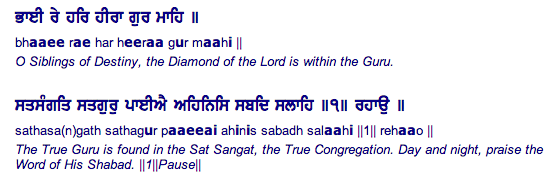
 Sangat: a concept that has been emphasized to me, and thus I have reiterated to others, for as long as I can remember. My mom telling me to be aware of the friends I was keeping at school, my camp counselors telling me that I should strive for sadh sangat, or people who will push me to be better in every moment.
As a young Sikh girl growing up in Wisconsin, sangat was something that was redefined for me every day. Although I found it in my peers on my softball team to my friends in the school musical, the sangat I truly desired was the one I found at gurdwara and at the local Sikh youth camp. With such a small Sikh community in Wisconsin, however, it was not something that was easily found. Sangat came in moments few and far between, and it was often something that I desired more than what I received.
Guest blogged by Shahe Kaur
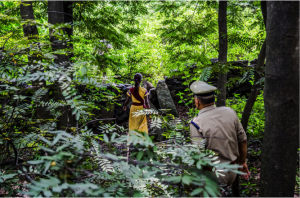
(Photo courtesy of Daniel Berehulak for The New York Times)
The story is not a scene from a movie or excerpt from a novel; it is the living nightmare of a 13-year-old rape survivor in Swang Gulgulia Dhoura, India. In a remote village in the woods, in the middle of the night, an intruder assaulted Devi while she sleeps in her hut. Startled by the stranger’s presence, Devi screamed and Harendra, the intruder, escaped. When Devi’s husband complained of the incident to the Panchayat (village elder), the Panchayat decreed that the punishment for Harendra’s crime would be that his sister, a 13-year-old girl, be raped by Devi’s husband, Pasi. According to the Panchayat, only then would justice be served for Devi.  In this case, the Panchayat happened to be the father of Devi, so his impartiality in commanding his son-in-law, Pasi, to carry out his sentence wreaks more of revenge than justice.
Nonetheless, Devi went into the 13-year-old’s hut and dragged her out by her hair, in the middle of the afternoon, and then passed her on to Pasi. Spectators stood by silently as the 13-year-old cried out for help as she was dragged into the jungle where the Panchayat’s sentence was carried out.  “The girl limped back to her family’s hut 45 minutes later, and then set out on the hour long walk to the nearest police station.â€Â In an act of great courage, the 13-year-old girl filed a complaint at the local police station. In these cases, survivors of sexual assault rarely file complaints and pursue legal action because perpetrators are rarely brought to justice. Those survivors that do seek justice risk bringing “besti†(dishonor) upon themselves and their families, sometimes risking greater consequences of further abuse.
PUZZL3PEACE is the alias of Los Angeles born Sikh artist Jusdeep Singh Sethi, who passed away last year in a tragic accident at the  age of 21. Jusdeep, the younger brother of hip hop artist Mandeep Sethi, used 35mm film photography as his primary means of creative expression. He was known for his deep love of and connection to nature and planned to go to school to study naturopathy and holistic healing.Â
According to Jusdeep’s tribute website:
Jusdeep recognized Mother Earth as his foremost teacher, while continuously giving praise to the most high divine spirit. He was never too proud to ask questions, working daily to diminish his own ego in order to learn more from those that surrounded him.
Jusdeep was a shining free spirit who created music and art with his sitar and film camera, while living a passionate life. Driven by his yearning for social justice and positive change, Jusdeep was also a genuine soldier for the causes. He had the power to light up a room with a smile and embodied the kind of energy that was delightfully contagious.
If you met Jusdeep even once, you remembered him forever.
Whether you had the privilege of meeting Jusdeep or not (sadly, I never did), his family and community are putting together an event in a few weeks well worth checking out if you’re in southern California. On August 16, 2014, community members, friends and family, and lovers of photography and art will be gathering in Los Angeles for the 1st Annual Puzzl3Peace Photo and Art Exhibition. The event will be a celebration the life and artistic work of Jusdeep and will feature his photos never seen before publicly. There will also be space to express and share memories of Jusdeep’s life, work, and impact on attendees.
According to Jusdeep’s brother, Mandeep, “This event marks a 1 year rotation around the sun since the transition of our young warrior. Jusdeep enshrined a piece of himself with all those he had the chance to share space with. When we collectively align together, we begin to fit together as parts of a larger puzzle. A puzzle that will bring us all Peace.”
Below are all the details. You can RSVP and spread the word on Facebook as well.
 Guestblogged by Daler Singh
Warning: This post contains graphic depictions of sexualized violence.
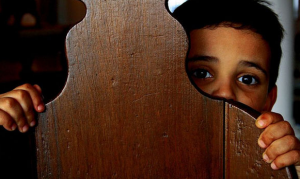
I was about 7 years old when a respected granthi and my dad’s friend sexually molested me. I would spend much of my afternoons and evenings at the gurdwara. My father is a devout Sikh and made sure he went at least once a day after work to visit, but Sundays were the days I remember my entire day could be spent at our local Gurdwara.  One evening, while divan was occurring, I went to go play hide-and-seek with my friends. During one of these games, I ran past a van that was parked on the premises of the gurdwara. It was brown and I remember there were curtains in the van. The door slid open and a young boy, a little older than me, climbed out. He immediately called over to me and asked me to come look inside the van, so I did.
Guestblogged by Jagga Singh.
 It was a hot June day, and I was stuck in traffic. This was the last place I wanted to be today. As the cars in front of me inched little by little, I imagined myself in my frigid air conditioned room reading a book or watching Netflix. Instead I was sweltering in the heat of my run down car slowly making my way across northern New Jersey so I could live in the woods for a weekend. When a friend I met at a book club told me about Lalkaar, a Sikh camp run by a progressive Sikh organization, I was excited to learn more about it and check it out. But at that moment in my car, I wish I had stayed behind.
It was only a week or so prior that I had finally decided that I wanted to go. Between job hunting and living at home, this summer was turning into a long rut. I wanted something to break the norm, I wanted to immerse myself into something larger than me. Unsure if they would consider my financial situation or the timing of my application, I sent a request in anyway. To my surprise, the folks at the Jakara Movement, the organization that runs the Lalkaar camp, accommodated my needs and were happy to have me attend. I couldn’t say no to that.
Guest blogged by Moninder Singh
I am for Palestinian statehood, and at the same time I am for the existence of the state of Israel. I am against rockets fired into civilian areas killing innocents indiscriminately, but I am even more against what can only be seen as purposely targeted air strikes against the children and innocents of Gaza. I am against those who think the existence of Jews and Israel must be challenged, and in the same breath, I am against Zionist and Israeli nationalism that doesn’t recognize the state of Palestine or the right to self-determination of the Palestinian people. It is indeed that simple in my mind.

A recent Palestine solidarity rally in the Bay area. Photo by Gurinder Singh Wadhwa.
It was only a recent photograph of a forward thinking and young Sikh waving a Khalistan flag at a pro-Palestine rally in California  that pushed me to give my views on the topic as well– but as a Sikh and not a wannabe political analyst. For weeks I have been listening to conversations from many within the Sikh community on the issue of Palestinian statehood versus the existence of Israel. The underlying question nobody is really touching on is, why does it have to be one or the other?
This illegal occupation and massacre instigated and carried out by Israel with excuses of Palestinian aggression has nothing to do with the fact that Yasser Arafat (former Leader of the Palestine Liberation Organization) was close to Indira Gandhi or the fact that Israel was instrumental in training Indian law enforcement agencies on dealing with threats to their national security which were also deployed in Punjab against Sikhs throughout the 1990s. These actions do not define the masses or their rights. It defines only misguided leadership and corrupt governments. What is even more troubling is the refusal of many Sikhs to comment on this issue by stating, “I am not an expert in Palestinian/Israeli affairs.” But who said you had to be? If it is only the “experts†that are needed to make decisions on the fate of an entire population, then we as Sikhs should take up shovels for digging graves and hauling carts of wood for funeral pyres because the oppressed peoples of the world who are resisting tyranny like the Palestinians will need them today, and make no mistake that we ourselves will likely need them tomorrow…just like we did yesterday.
A revolution never did and never will need “experts.†A revolution needs nothing but the people. And from them it demands their minds for the ability to think without fear, it demands their voices for the ability to speak without fear, and if needed, it will demand their blood to accomplish their dream to live without fear. It should never be that the oppressed of yesterday becomes the oppressor of today, but when that does happen and as it has happened in the case of Israel oppressing our Palestinian brothers and sisters, we as Sikhs have a duty to uphold the principles of our Gurus and stand in solidarity with and struggle alongside those who are being oppressed.
Guest blogged by Shahe Kaur

 On June 27, 2014, Punjab 1984, directed by Anurag Singh, was released by White Hill Production and Basic Brothers Productions. Kirron Kher and Diljit Dosanjh play the starring roles in the film as mother and son. This is not the first movie released which discusses issues related to the events of 1984, and hopefully it will not be the last. Like those movies before it, this movie has evoked mixed reactions from its audience.
Many Sikhs have criticized the movie with claims that it distorts facts and is nothing but State propaganda that negatively portrays Sikhs. However, It is important to watch these movies without preconceived notions so that we don’t read our own personal bias into the message.
The film is not meant to be a film about the Khalistan Movement nor is it meant to be a historical documentary. In an interview with Anurag Singh, he states that the film was intended to paint the picture of a mother’s udeek for her son and the struggles and atrocities she had to endure at the hands of law enforcement when inquiring about her son’s whereabouts. This is the first time that this subject has been discussed in a movie from the point of view of a mother. Women are often left out of discussions about ’84, even though it is widely known that many Sikh women were attacked, tortured, and raped, often in front of their families. Rape was used as a weapon of war (as it often is), and many of the victims and their families remain silent today out of the misplaced shame that is associated with those atrocities.
The film showed the main character, like many Sikhs who joined the movement, taking up arms because of his family’s tragic circumstances, corrupt law enforcement, and a government that did not provide him with any other alternative. The film truthfully illustrated how local police officers engaged in lodging falsified evidence against innocent Sikhs, incarcerating them, and then later shooting them in “encounters†where officers falsely claim that those Sikhs tried to escape from custody. Instead of enforcing laws to protect those who were being oppressed, law enforcement protected the oppressors and increased persecution of Sikhs to gain promotions and preserve their own self-interests. It also showed Sikh revolutionaries reciting Waheguru’s prayers and standing against attacks on innocent civilians.
185 Palestinians have been killed, thousands injured, and nearly 1,000 homes destroyed in the last week in Gaza by Israeli airstrikes (underwritten by American tax dollars). My last post about the dangers of Sikh alliances with pro-Israel groups has sparked some important and much needed discussion and debate in our community about this issue.
Many people I talk to (Sikh and non-Sikh alike) explain they feel like they do not know enough about the situation to take a stance or get involved. Or they feel overwhelmed about the complicated history of the conflict. If this sounds like you or anyone you know (or you just want a history refresher), check out this short video put out by Jewish Voice for Peace.Â
And if you don’t understand why this is a Sikh issue, see here, here, or here for more about that.

A rally in Brooklyn, NY in support of the BDS movement on Monday.
Monday evening in Brooklyn, about 50 people gathered to protest Israeli apartheid and encourage the boycott of Israeli goods, a part of the growing boycott, divestment, and sanctions (BDS) movement. Inspired by the effective use of boycott and divestment tactics in the struggle against South African apartheid decades ago, the BDS movement is growing with recent victories such as the Presbyterian Church (USA) and many colleges and universities deciding to stop investing in companies complicit in the oppression of the Palestinian people.
The mood of Monday’s rally was heavy. What was intended to be a celebration of the 10th anniversary of the BDS movement instead was a mourning of the many Palestinian lives taken in recent days by Israeli soldiers/bombs and civilians/settlers alike. Like Muhammad Abu Kheidr, a 16-year-old who was burned alive last week in what is widely assumed to be a revenge lynching by Israeli settlers after the bodies of three missing Israeli teens were discovered (blamed on Hamas without any evidence). Or Muhammad’s cousin Tareq, a 15-year-old Palestinian American who was badly beaten and detained for being at the wrong place at the wrong time (with the wrong ethnicity) a few days later. Or the 31 people in Gaza killed and countless others injured and displaced by 378 Israeli airstrikes in the last two days of its increasingly devastating “Operation Protective Edge.” Or the 10+ killed and over 360 kidnapped in Israel’s “Operation Brother’s Keeper” a few weeks ago in the West Bank, a form of collective punishment on the entire population after the  disappearance of three Israeli boys.
This past weekend was pride weekend in my home of New York City and many other cities around the country and world. I missed many of the festivities because I was traveling but did attend the annual Trans Day of Action last Friday, a march a rally organized by the Audre Lorde Project and many other groups on the historic Christopher Street Pier. It was a beautiful gathering of a very diverse and energetic group of queer people, trans people, and allies. The event was largely led by LGBT (lesbian, gay, bisexual, and transgender) people of color and immigrants, a breath of fresh air given how these individuals are so often invisible/marginalized/excluded in both the mainstream gay movement and in their own communities and families.
Towards the end of the rally, a young desi man came up to me, introduced himself, and asked me about local Sikh activist groups to get involved in. He, like so many others in our community, has not found a Sikh space where he can take action on the various social justice issues he is passionate about — including LGBT rights and justice. We had a nice, short conversation about the activist roots of Sikhi and our Gurus’ radical commitment to equality and liberation. Yet we are all too aware of the rampant homophobia in our community, which I have written about before.
Given this reality, I was happy to see a PSA circulating in the last few days that features a Sikh family speaking out against homophobia. We could certainly use one in Punjabi to reach more members of our community, but this Hindi video is a great start nevertheless.
4) PSA Hindi from Asian Pride Project on Vimeo.
A few weeks ago, I was invited to participate in a planning and brainstorming retreat for an innovative pilot project that Union Theological Seminary is launching this summer. UTS, which has a longstanding commitment to social justice, are aiming to bring together a group of 30 young(ish) (21-35 year old) leaders from different religious and spiritual backgrounds for five days in New York City this July to explore the intersection of faith and justice and build a stronger spiritual activist movement together.
The Millennial Leaders Pilot Conference will take place July 13th to 17th at UTS in Manhattan. All travel and room and board expenses will be covered for participants, who should have histories of doing social and economic justice work in their respective communities. According to the conference website, applicants “may be community organizers, staff of NGO/NPO, in ordained or lay service to a local church or religious community, as well as they may function is less official leadership roles. Formal affiliation with a specific religious tradition or community is not a prerequisite and people with no affiliation are encouraged to apply. In this regard, the only formal requirement is an interest in the intersection between spirituality and activism.”
This promises to be an exciting and unique gathering with the potential of building a more long-term, sustainable movement of activists and organizers from different faith traditions. At the planning retreat, many of us discussed how questions of spirituality and religion are so often left out (or are even taboo sometimes) in progressive social and economic justice spaces. And on the other hand, which we often discuss here at The Langar Hall, social and economic injustices are so often perpetuated in the name of religion, including Sikhi.
If these ideas resonate with you, I hope you’ll consider applying and spreading the word to your friends, family, and colleagues, Sikh and non-Sikh alike. All the details about the conference and the application can be found here. The deadline to apply is the end of the day this Friday, May 23rd.
Guest blog by:Â Jaspinder Singh
 On the 23th of May 2014, Ensaaf will be releasing their documentary, ‘The Last Killing’ to the general public. It is an outstanding and powerful 20 minute film, showing the resolve of Sikhs who have faced indescribable hardships and terror, on their journey to bring to justice those who had destroyed their families.
The period under scrutiny is Punjab, India (1984-1995) where the Police had free reign to crack down on Sikhs campaigning for equal social, economic and religious rights. By systematically killing and torturing Sikhs they aimed to break the morale of activists and suppress the movement.
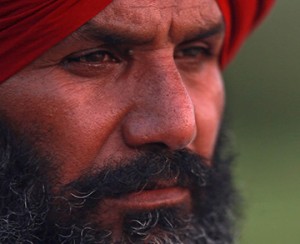
The documentary itself centres around Satwant Singh Manak, who, as a police officer, witnessed the unlawful killings of 15 innocent men by the hands of his colleagues. After seeing a 16 year old individual being beheaded and dumped in a canal, he raised his voice against his seniors. The result was for the Punjab Police force to begin a campaign of terror on Manak and his family. At first, Satwant Singh was held and brutally tortured for 42 days. Upon release he resigned from the Police force and filed an official case. The Police authorities responded with another savage attempt to silence him and this time it was his father who was picked up and tortured. Shortly after being released he died from the injuries sustained.
Despite this terrible ordeal, Manak persisted to fight the case of 10 of those victims and the film narrates this struggle, with the help of testimonials from key individuals involved.
It poignantly brings to life the statistics we have always read about and shows profoundly how the horrors of Punjab between the 80s and 90s is not an historic event but an everyday nightmare for all of those families who had seen their loved ones kidnapped or killed.
The director, Satinder Kaur, has captured the mood of Satwant Singh Manak’s story eloquently, where the viewer can intrinsically relate to the feelings and emotions of those deeply affected by the atrocities. The cinematography and editing is superb throughout which is befitting of the important message it is presenting.
I watched this documentary for the second time with my parents ahead of writing this review. As we discussed the film after it had finished, they began to reveal how we had also lost relations in Punjab in suspect circumstances. Between them, they concluded that at least 3 relatives had been killed or disappeared illegally by Punjab Police. This was something I had not known before.
It is in this context that I can see how powerful this film can be for our community. It will awaken us to come to terms with our past and inspire us to become like Manak, not intimidated but steadfast in our determination to prosecute those who ripped families apart and left them languishing in silence.
To conclude, there have only been a small number of occasions in the last decade where I feel the Sikh community has been able to adequately portray the deep sense of injustice felt towards the Indian authorities using media. This production from Ensaaf is by far one of the most courageous documentaries I have seen. I wholeheartedly recommend that everyone takes the time out to watch it and personally takes responsibility in making sure the brave voice of Satwant Singh Manak resonates in our community. Thank you to Ensaaf for their tremendous work.

